In this article
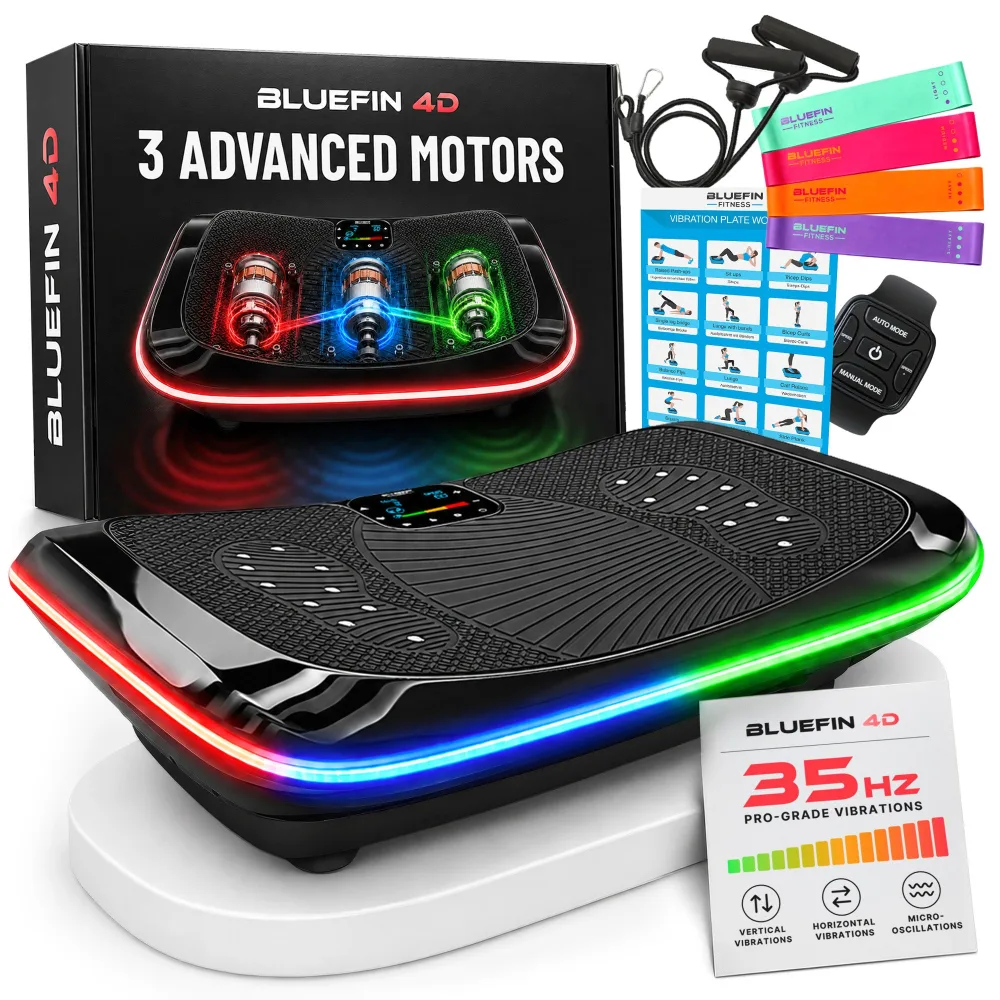
The Bluefin 4D is the plate for people who want more than a simple rocking board without paying premium prices. Three separate motors give you vertical vibration, side-to-side oscillation and a fine micro-vibration, either on their own or combined, with frequencies up to 34.6Hz. It’s big, sturdy and great fun to use. The wrist remote is fiddly and some units develop faults over time, so weigh that against its versatility.
Reasons to buy
- Three motors and several motion types
- Frequencies up to 34.6Hz
- Large, stable platform
- Bluetooth speaker, bands and mat included
Reasons to avoid
- Heavy at around 21kg, with no wheels
- Wrist remote is fiddly
- Some reports of rattles and faults after months of use
The 4D is the flagship floor plate from UK brand Bluefin Fitness. It sits in our £££ Mid price band (£200 to £600). The headline is its three-motor design, which lets it switch between, or combine, the main types of vibration you’ll find on home plates.
That flexibility makes it an interesting choice if you’ve outgrown a basic board, or if you can’t decide which type of motion you prefer. Here’s how it stacks up.
Key specs
| Price | £££ Mid (£200 to £600) |
|---|---|
| Motion | Vertical vibration, oscillation and micro-vibration (3 motors) |
| Max frequency | Up to 34.6Hz |
| Programmes | 3 preset plus 7 manual modes |
| Max user weight | 150kg |
| Size | 79 x 46 x 21cm |
| Weight | Around 21kg |
| Extras | Wrist remote, Bluetooth speaker, resistance bands, foam mat, exercise chart |
Design and build
The 4D is a substantial piece of kit. At 79 x 46cm, the platform is roomy enough for wide squats, lunges and push-ups with your hands on the plate, and at around 21kg it feels very planted on the floor. The flip side is that it’s awkward to lift and has no wheels, so it isn’t ideal if you need to put it away after every session.
Owners often comment on how solid and well finished it looks, and the coloured LED indicator, which shows the current intensity in red, blue or green, is a nice touch. It comes with a wrist remote, resistance bands, a foam floor mat and an exercise chart.
Performance
This is where the 4D stands out. Its three motors give you a choice of vertical vibration, where the plate moves straight up and down, oscillation, where it rocks side to side, and micro-vibration, a finer, faster buzz. You can use them separately or combine them, which keeps sessions varied. Our guide to the types of vibration plate explains how each motion feels.
A top frequency of 34.6Hz is far higher than most budget plates, which tend to top out around 12 to 15Hz, and puts it closer to the range used in much of the research. It’s not the same as a precision machine like the Power Plate MOVE, but it’s a lot of range for the money.
Ease of use
The 4D offers three preset programmes and seven manual modes. The wrist remote is the weak spot. It’s small, the buttons aren’t very intuitive, and it ships with a plastic tab in the battery compartment that you need to pull out before it works, which catches out plenty of new owners. Once you’ve got the hang of it, everyday use is straightforward. Each programme runs in 10-minute cycles, which is a sensible session length.
What owners say
Owners love the build quality, the size of the platform and the variety of motion. The criticisms are consistent too: the remote, an unclear manual and, for a minority, rattles or motor problems after several months. Bluefin’s support is generally well regarded within the warranty period, but repairs outside it can be expensive.
Price and value
In the £££ Mid band, the 4D costs more than the LifePro Waver and the Bluefin Pro. You’re paying for its three motors and its much higher frequency range. If you know you want that variety, it’s good value. If you just want a dependable rocking plate, the LifePro is the better buy.
How it scores
Overall score: 4.2 out of 5, which we call Very good. Each area is scored out of five and weighted as explained in how we review.
Show how we worked it out
| Area | Weight | Score | Points |
|---|---|---|---|
| Motion and power | 30% | 4.6 | 1.38 |
| Build and safety | 25% | 4.0 | 1.00 |
| Controls and features | 15% | 4.2 | 0.63 |
| Ease of use | 15% | 3.8 | 0.57 |
| Value for money | 15% | 4.2 | 0.63 |
Weighted average: 4.21, which rounds to our final score of 4.2.
Compare similar plates

Bluefin 4D
4.2/5Very good- Price
- £££ Mid
- Motion
- Three motors: vertical, oscillating, micro
- Max user
- 150kg
 4.3/5Very good
- Price
- £££ Mid
- Motion
- Vertical, upright
- Max user
- Not stated
 3.6/5Good
- Price
- £££ Mid
- Motion
- Three motors: vertical, oscillating, micro
- Max user
- 120kg
 4.5/5Outstanding
- Price
- ££ Entry
- Motion
- Oscillating
- Max user
- 150kg
Alternatives to consider
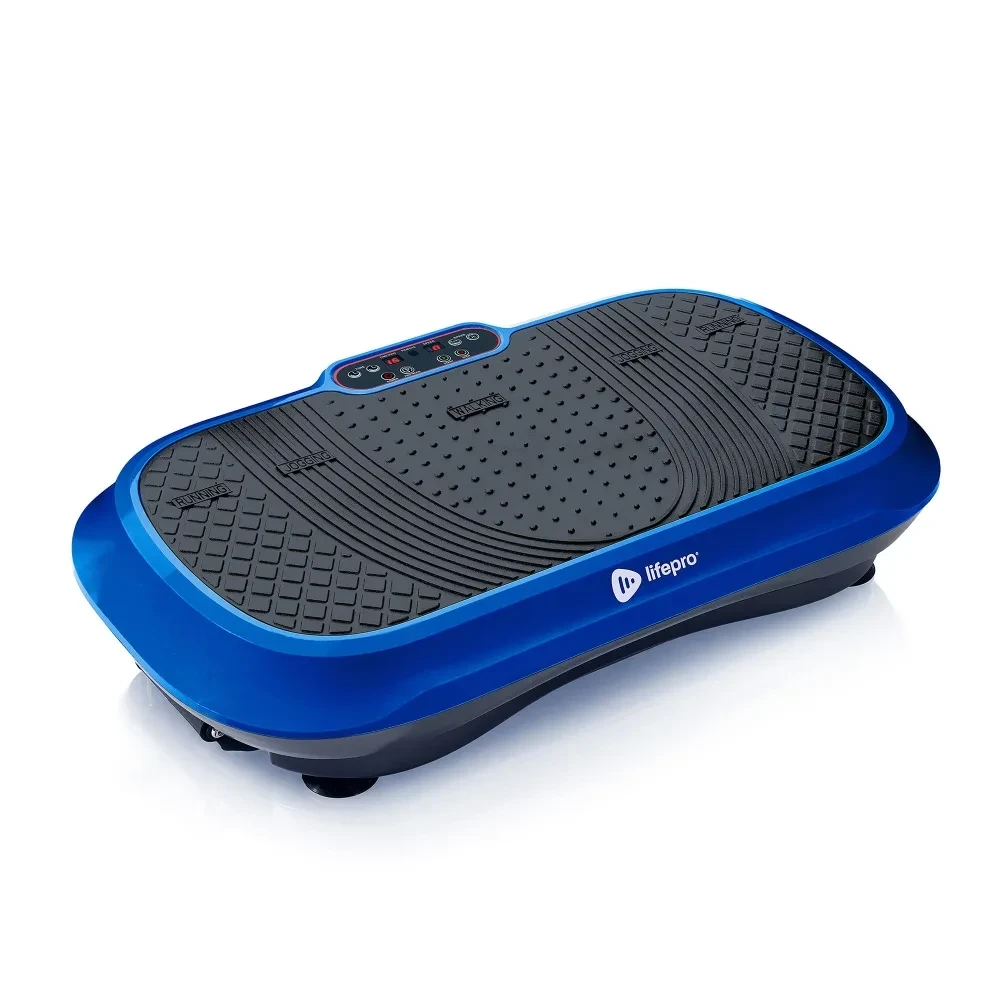
- LifePro Waver: simpler, lighter and more reliable, with oscillating motion only.
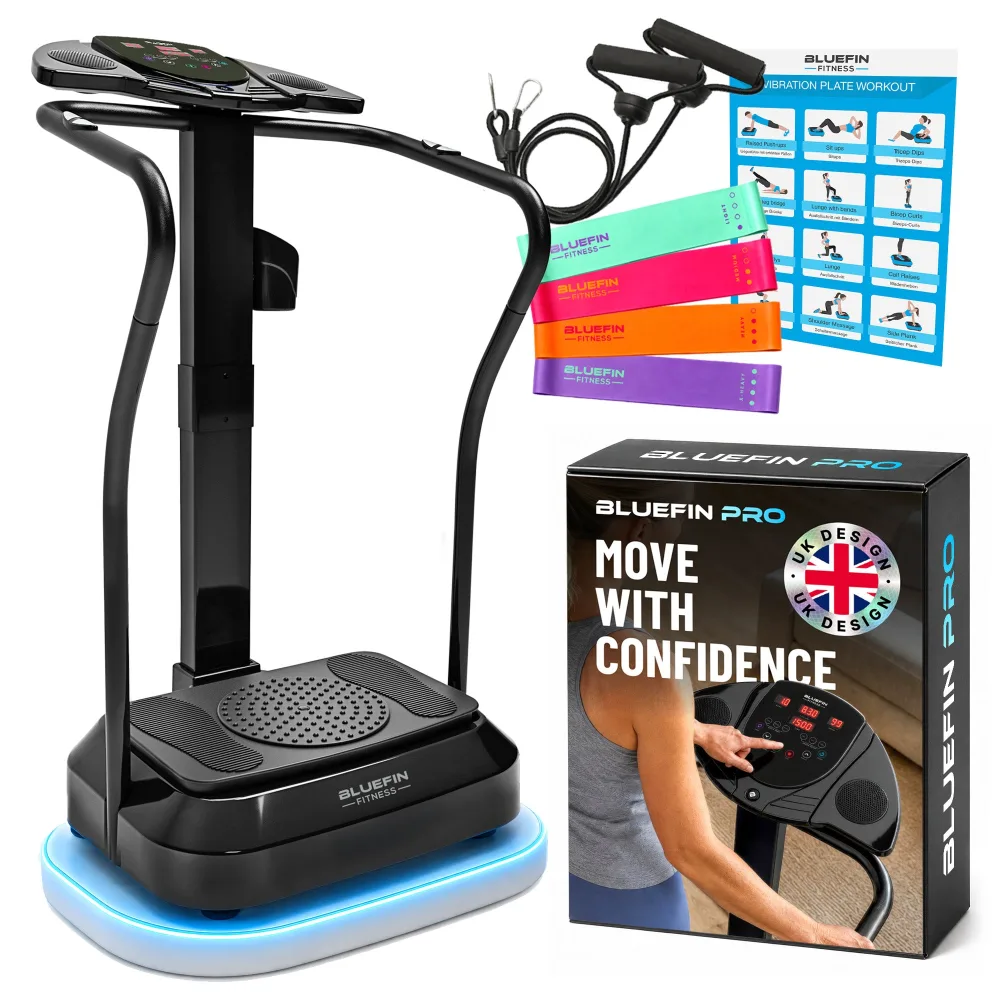
- Bluefin Pro: the same brand’s upright model, with handlebars for support.
- Power Plate MOVE: the premium step up, with research-grade vertical vibration.
Bluefin 4D FAQs
Why isn’t my Bluefin 4D remote working?
The remote is shipped with a small plastic tab protecting the battery. Open the back, remove the tab and close it again. If it still doesn’t work, try a fresh CR2032 battery.
What does 4D mean on a vibration plate?
It’s a marketing term rather than a technical standard. On the Bluefin 4D it refers to the combination of vertical vibration, oscillation and micro-vibration from its three motors.
Is the Bluefin 4D too powerful for beginners?
No. You can start on the gentlest settings and build up. Its range simply gives you more room to progress.
Should you buy the Bluefin 4D?
If you want a versatile, powerful floor plate and don’t mind its size, yes. The Bluefin 4D offers more types of motion and a higher frequency than anything else near its price. If you value simplicity and long-term reliability most, the LifePro Waver is the safer bet.